
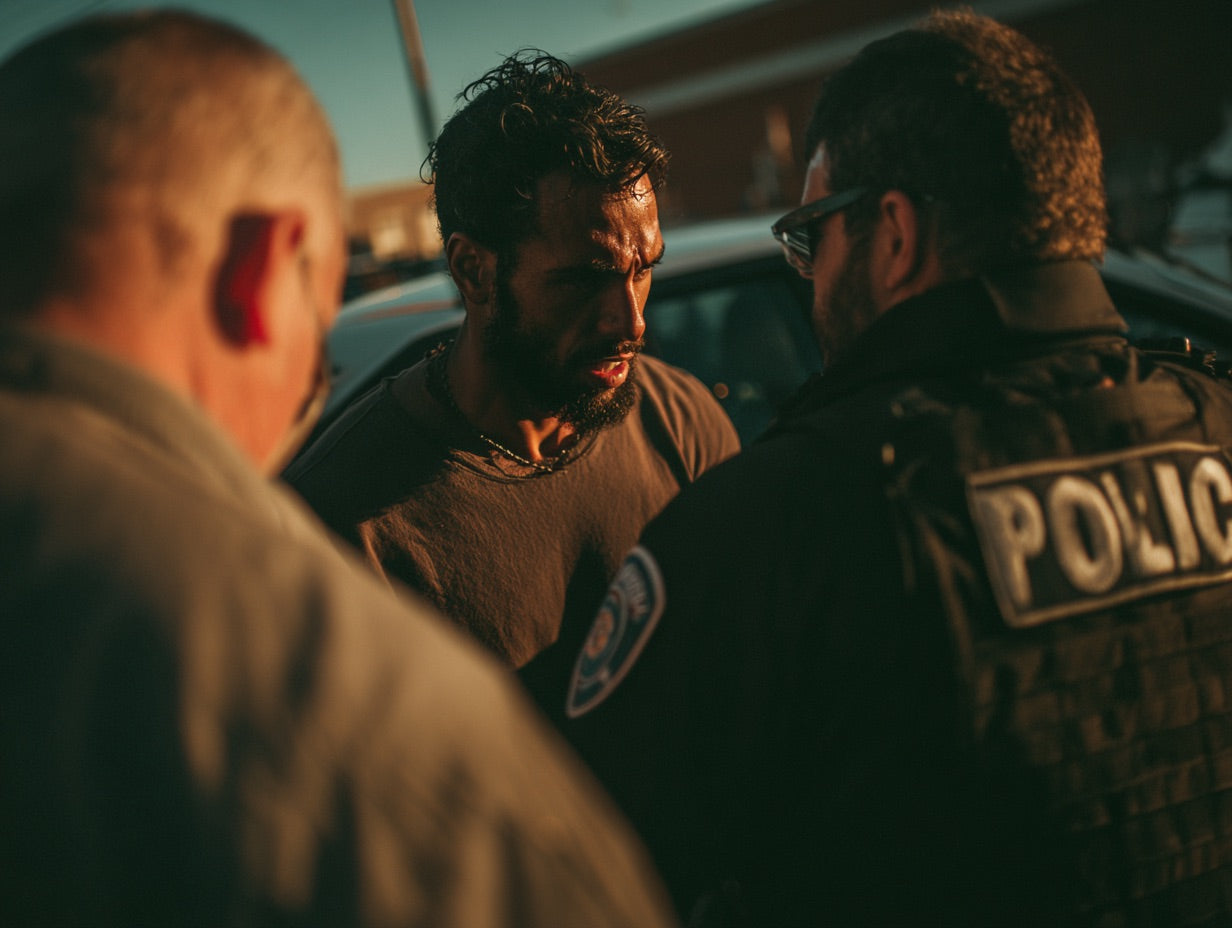
A fight on a fair midway is over in about fifteen seconds. Two people who've been drinking since noon exchange words in a line, someone shoves, someone swings, and by the time security pushes through the crowd it's finished. Police arrive, one or both people leave in handcuffs, and almost nobody involved understands the thing that will matter most in the weeks ahead: under Michigan law, the difference between a 93 day misdemeanor and a 10 year felony often comes down to what was in someone's hand during those fifteen seconds.
How does Michigan grade an assault charge?
The bottom of the ladder is assault and battery under MCL 750.81, a 93 day misdemeanor with a fine up to $500, where "assault" means an attempt or threat of force that puts a person in reasonable fear of immediate harm and "battery" means the actual offensive touching. No injury is required, so a shove that connects satisfies the statute, and so does a swing that misses if it put the other person in reasonable fear. One rung up sits aggravated assault under MCL 750.81a, a one year misdemeanor that applies when the assault causes a serious or aggravated injury without a weapon and without intent to commit murder or inflict great bodily harm; broken noses, orbital fractures, teeth knocked loose, injuries needing stitches, and concussions all land here. At the top are the 10 year felonies: assault with intent to do great bodily harm under MCL 750.84, which requires specific intent that prosecutors argue from repeated strikes to a person already down or a continued attack after the fight was plainly over, and assault by strangulation under MCL 750.84(1)(b), which covers any impeding of normal breathing or circulation by pressure on the throat or neck. Strangulation requires no visible injury at all, a hand on someone's neck for two seconds during a scuffle can support it, and it's charged far more often than people expect.
Why does the object in your hand change everything?
Between the misdemeanors and the 10 year felonies sits felonious assault under MCL 750.82, a four year felony with a fine up to $2,000 for assault with a dangerous weapon, and it's where fair cases get serious, because Michigan courts evaluate how an object was used rather than what it normally is. At a county fair, the objects charged as dangerous weapons routinely include a beer bottle or can, a folding chair, a tent stake or pole, a belt or belt buckle, a cooler lid, a vehicle in a parking lot incident, and a pocketknife that was never even opened. Consider two identical punches thrown on the same midway: one thrown bare handed is a 93 day misdemeanor, while the same punch thrown with a beer bottle still in the hand is a four year felony. Same person, same fight, same fifteen seconds, radically different exposure, which is why defense work in these cases turns immediately to whether an object was used or merely present, whether it made contact, whether it was used in a manner capable of causing serious harm, and what the video actually shows versus what witnesses remember.
Can you claim self-defense after a fair fight?
Michigan's Self-Defense Act, MCL 780.971 and following, provides that a person who hasn't engaged in a crime and is somewhere they have a legal right to be has no duty to retreat, and may use force when they honestly and reasonably believe it's necessary to defend against the imminent unlawful use of force. The most important procedural feature is that once self-defense is properly raised, the prosecution bears the burden of disproving it beyond a reasonable doubt. The limits matter just as much: an initial aggressor generally can't claim it unless they withdrew and communicated that withdrawal, the force must be proportional (responding to a shove with a bottle is not), and once the threat ends, the right to use force ends, so continuing after the other person is down turns a defense into an offense. Michigan also permits force to defend another person under the same standard that would apply to defending yourself, which matters at fairs because these fights frequently start when someone intervenes for a friend, a sibling, or a stranger, and whether that intervention was lawful depends on whether the person being defended had a valid claim.
Why does the wrong person end up in handcuffs?
Officers arriving at a chaotic midway make fast judgments based on who's still standing, who's visibly injured, who's talking loudest, and who the nearest bystanders point at, which means the person who was defending themselves is regularly the one arrested, particularly if they were the one upright when police walked up. Defensive injuries look different from offensive ones, but that distinction requires someone to actually examine it, and it rarely happens at the scene. That first sorting at the fairgrounds isn't the end of the case, though it often decides who spends the night in a cell and whose name goes on the complaint.
What evidence actually decides these cases?
Fairgrounds and vendor cameras exist, and their footage is frequently overwritten within 14 to 30 days, so a preservation letter from an attorney within days of the incident is the reliable way to secure it. Bystander cell phone video almost always exists at a crowded fair and is almost never collected by police, body camera footage from responding officers captures the scene the report describes from memory, and medical records establish the actual injury severity, which frequently doesn't match the initial report. Security and vendor staff are often the most neutral witnesses available, and evidence of how much the complaining witness had been drinking is relevant to the reliability of their account. None of this gathers itself, and most of it has a shelf life measured in days or weeks.
What other charges get stacked on top?
An assault charge from a fair rarely travels alone. Disorderly conduct under MCL 750.167 is a 90 day misdemeanor that gets added routinely, resisting and obstructing under MCL 750.81d is a two year felony that appears constantly when an arrest goes badly, and malicious destruction of property under MCL 750.377a covers damage to vendor property or vehicles. Anyone under 21 who was drinking picks up an MIP under MCL 436.1703, and anyone who then drove home risks an OWI under MCL 257.625 on top of everything else.
How do these cases end without a conviction?
The Holmes Youthful Trainee Act, MCL 762.11, covers offenses committed on or after the defendant's 18th birthday and before their 26th, defers the proceedings, and ends in dismissal without a public record on successful completion, and it covers assault charges. Delayed sentencing under MCL 771.1 lets the court hold off for up to a year and dismiss or reduce on compliance. The single most valuable negotiation in these cases is the reduction from felonious assault to aggravated or simple assault, and outright dismissal is realistic where self-defense is well supported or the identification is weak. Every one of those outcomes has to be built and requested; none of them arrives on its own.
What should you do in the first 48 hours?
The window right after a fair fight is when the case is most winnable, and the steps are concrete:
- Photograph every injury on yourself, from multiple angles, over several days as bruising develops.
- Get medical treatment and make sure the records reflect how the injuries occurred.
- Write down everything tonight, not next week.
- Collect names and numbers from everyone who saw it.
- Don't contact the other party or their friends, and don't apologize by text; those messages become exhibits.
- Don't post about it, and don't delete anything already posted.
- Get an attorney working on video preservation within days.
Fifteen seconds shouldn't decide the next decade
Charges from the Wayne County Fairgrounds in Van Buren Township go to the 34th District Court in Romulus, and felonies like felonious assault, assault with intent to do great bodily harm, and strangulation proceed through preliminary examination before bind over to Wayne County Circuit Court. Assault cases from crowded outdoor events are won on footage that still exists and witnesses who still remember, and both disappear fast, which is why our assault and battery defense practice starts with preservation before anything else. Call Boria Law at (734) 453-7806. Attorney Aaron J. Boria moves quickly on preservation and investigation in assault cases across Wayne County, so that fifteen seconds on a midway doesn't cost you the next ten years.
Quick answers
How long does fairground surveillance footage last?
Fairgrounds and vendor camera footage is frequently overwritten within 14 to 30 days, and police rarely collect it on their own. A preservation letter from an attorney sent within days of the incident is the reliable way to secure it, which is why the first week after a fair fight matters more than any court date that follows.
Should I reach out to the other person to smooth things over?
No. Don't contact the other party or their friends, and don't apologize by text, because those messages become exhibits in the prosecution's case. Anything that needs to be communicated can go through your attorney, and staying silent in the meantime costs you nothing.
Will a HYTA dismissal from an assault case leave a public record?
No public record survives a completed HYTA term. The Act covers assault charges for offenses committed on or after the 18th birthday and before the 26th, defers the proceedings, and ends in dismissal on successful completion. It's discretionary and has to be requested, which is why how the early weeks of the case are handled decides whether it's available.
Related reading
- Michigan Assault Charges After a Bar Fight in Downtown Plymouth
- Wayne County Fair Week: OWI, MIP, and Carnival Arrests in the 34th District Court
- Charged With Domestic Violence in July: Why Summer Is Michigan's Peak Season
Share:
Michigan Assault Charges at County Fairs: What a Midway Fight Actually Costs
Michigan Assault Charges at County Fairs: What a Midway Fight Actually Costs