
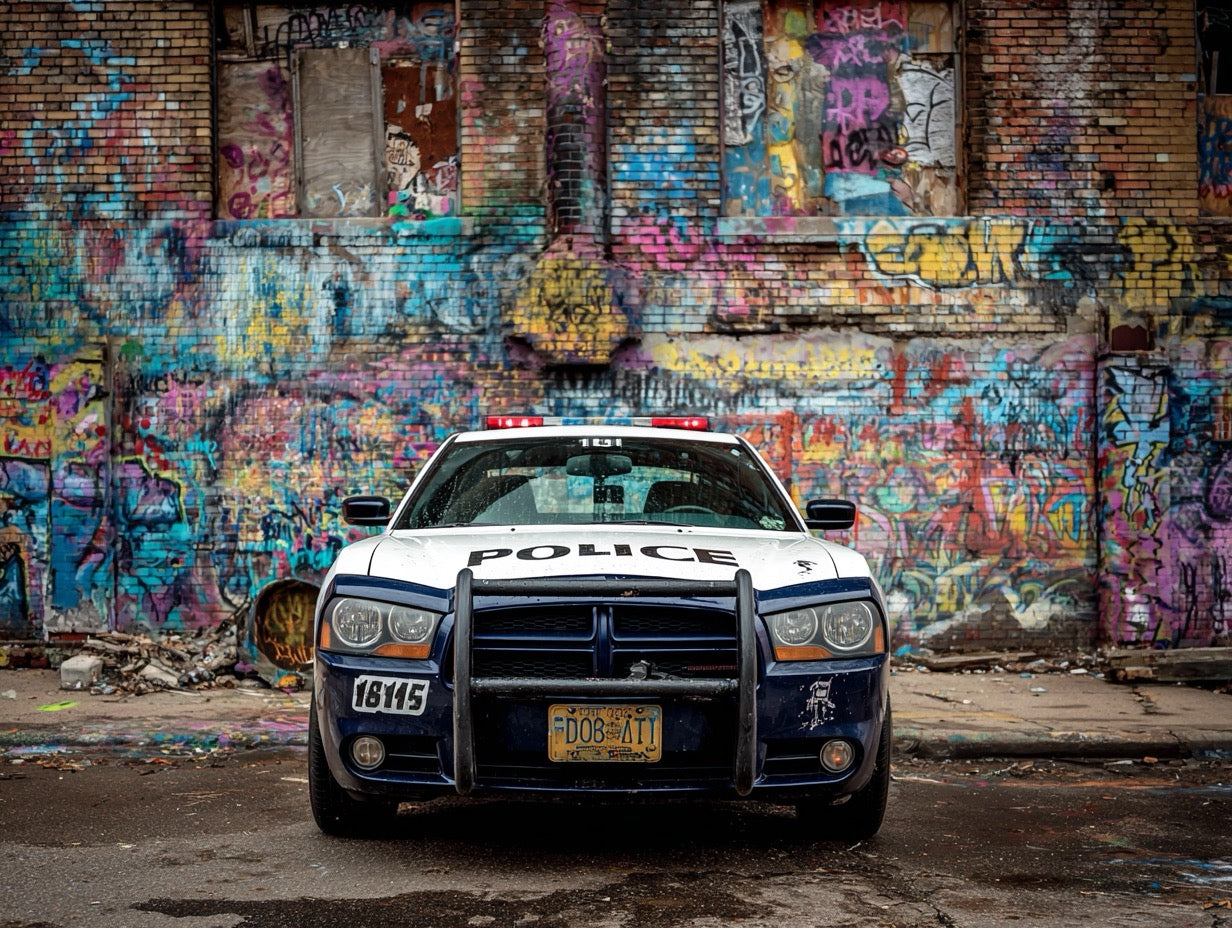
By the time the demolition derby lets out, the person who arrived at the Wayne County Fairgrounds at noon has spent nine hours in the August sun on Quirk Road, walking the midway, standing in beer tent lines, eating fair food, and sweating through the grandstand. At 9:00 p.m. they feel fine to drive, and that self-assessment is the most dangerous judgment call of fair week. The fair opens this Friday in Belleville and runs through August 15, the crowds come down I-94 from Plymouth, Canton, and Westland, and the arrests that follow those nine days all share one surprise that catches families off guard after the fact.
Which court will actually hear your case?
This is the first thing Plymouth area residents get wrong. The fairgrounds sit in Van Buren Township, which means charges arising at the fair are arraigned in the 34th District Court in Romulus, not the 35th District Court in Plymouth. The 34th District covers Van Buren Township, Belleville, Romulus, Huron Township, and Sumpter Township, and it's a different bench, a different prosecutor's office, and a different set of local practices from what Plymouth residents may have encountered before. Felony cases from the fair are bound over to Wayne County Circuit Court in Detroit after preliminary examination, same as any other Wayne County felony, but practically speaking every court date requires a drive to Romulus rather than a trip into downtown Plymouth, and it means having an attorney who actually appears in that court matters.
Why is the drive home the riskiest part of the day?
The fairgrounds sit just off I-94 at the Belleville Road exit, and the drive back to Plymouth and Canton runs I-94 to I-275 north, or Belleville Road to Michigan Avenue and north through Canton, with both corridors seeing increased patrol activity during fair week, particularly after the grandstand events let out. The beer tent operates alongside a full day of sun and walking, so a person who's been on the grounds since noon has a very different blood alcohol picture at 9:00 p.m. than they think they do. Under MCL 257.625, a first offense OWI carries up to 93 days in jail (180 days for a high BAC of .17 or above), fines of $100 to $500 or $200 to $700 for high BAC, a 30 day hard license suspension followed by 150 days restricted (with a 45 day hard suspension for high BAC), six points on the driving record, mandatory substance abuse assessment and treatment, possible vehicle immobilization, and an ignition interlock on any restricted license after a high BAC conviction. County fairs are family events, which makes one enhancement unusually relevant: under MCL 257.625(7), operating while intoxicated with a child under 16 in the vehicle carries up to one year in jail for a first offense and becomes a felony for a second offense within 10 years, and parents driving kids home from a day at the fair are exactly the profile that statute captures.
What turns a misunderstanding into a two year felony?
Resisting and obstructing under MCL 750.81d is a two year felony, and it's the charge that converts a fair week misunderstanding into something that follows a person for life. It doesn't take a brawl to support it: pulling away during handcuffing, refusing a lawful order to leave the grounds, or stepping between an officer and a friend can all sustain the charge, which is why the safest posture during any fair week police contact is calm compliance now and argument later, through counsel, in a courtroom.
What are the other alcohol charges fair week produces?
Fair week draws large numbers of teenagers, often unsupervised for hours at a time, and MIP under MCL 436.1703 is a state civil infraction for a first offense, with a fine up to $100 plus possible substance abuse screening, education, and community service, escalating to misdemeanors for second and third offenses; the statute's deferral provision can produce dismissal without a public record on a first offense, but it has to be requested through the court. The beer tents check identification, and the fake IDs they catch generate charges under MCL 436.1703(2) and MCL 28.295 for false representation of age, a misdemeanor carrying up to 93 days, with the serious escalation coming when the ID contains another real person's information, because prosecutors can then charge identity theft under MCL 445.65, a felony. Disorderly conduct under MCL 750.167 rounds out the set as a 90 day misdemeanor that typically covers intoxication in a public place combined with either endangerment or conduct causing a public disturbance, and it's worth knowing that intoxication alone is not the offense; the statute requires that additional element, and a meaningful number of fair week disorderly charges fail on exactly that point.
How do theft, drugs, and parking lot accidents get charged?
Theft from vendors and midway games is charged as larceny under MCL 750.356, which is tiered by value with a five year felony at $1,000, but larceny from a person under MCL 750.357 is a 10 year felony regardless of value, so what someone took matters far less than where they took it from. On the drug side, possession of cocaine, MDMA, psilocybin, or prescription medication not prescribed to you is a felony under MCL 333.7403, marijuana use in public is a civil infraction under MCL 333.27954 with a fine up to $100, and the most valuable tool in a first offense possession case is MCL 333.7411, a once in a lifetime diversion that defers judgment and dismisses the charge without a public record on successful completion, provided someone asks for it. The fairgrounds lots add their own cases, because they're dark, crowded, and full of vehicles, and property damage accidents where a driver leaves the scene are misdemeanors under MCL 257.618 and 257.619. Ride injuries run the other direction, generating civil claims and occasionally criminal investigations, so photograph everything and get medical documentation if your family is on that side of the incident.
Why does the 14 day deadline run faster than the case?
Refusing the post arrest chemical breath or blood test triggers an automatic one year license suspension, and you have 14 days from the date of arrest to request a hearing with the Michigan Secretary of State. That clock runs independently of the criminal case, it doesn't wait for your arraignment or your attorney search, and missing it is effectively permanent. Everything else in a fair week OWI case can be worked over months; this one thing can't.
What makes fair week cases defensible?
Nine days of enforcement at a crowded outdoor venue produces evidence problems, and they run in the defense's favor: identification in a crowd of thousands, field sobriety testing on gravel and grass in August heat, chemical testing done well after the stop, and reports written from memory hours later. A person who spent eight hours in the sun presents with flushed skin, red eyes, and unsteadiness whether or not they've been drinking, which is exactly the profile officers are trained to read as intoxication. None of that makes a charge disappear on its own, but it's the raw material a defense is built from when someone actually examines the file instead of pleading through it.
What should you keep, and what should you keep to yourself?
Say nothing to security, fair staff, or police beyond identifying yourself, and don't consent to a search of your bag, cooler, or vehicle, because consent is the one thing that can't be litigated later. Keep your wristband, ticket stubs, and vendor receipts, since they establish your timeline, identify witnesses immediately including anyone you were with, and photograph any injuries on yourself over several days as bruising develops. If a chemical test was refused after an OWI arrest, calendar the 14 day Implied Consent deadline under MCL 257.625c before you do anything else, and don't post about any of it online, because those posts get read by exactly the people you don't want reading them.
A Belleville charge is a case to work, not a drive to dread
A charge from the Wayne County Fair means a case in Romulus, not Plymouth, and that logistical reality catches people off guard just when they need to be making good decisions. It's also where our drunk driving defense practice does its most useful work, because the evidence problems that riddle fair week cases only matter if someone puts them in front of the court. Call Boria Law at (734) 453-7806 before your arraignment. Attorney Aaron J. Boria appears in the 34th District Court and handles fair week cases for Western Wayne County families, which means the 9:00 p.m. judgment call that felt fine on the midway doesn't have to become the record that follows you home.
Quick answers
What happens if I clipped a car in the fairgrounds lot and left?
Leaving the scene of a property damage accident is a misdemeanor under MCL 257.618 and MCL 257.619, and the fairgrounds lots produce these cases every year because they're dark, crowded, and chaotic at closing. Talk to an attorney before making any statement about what happened, because how the reporting is handled shapes the charge.
Do wristbands and vendor receipts really help a defense?
Yes. Your wristband, ticket stubs, and vendor receipts establish a timeline of where you were and when, which matters in a venue where identification happens in a crowd of thousands and reports get written from memory hours later. They cost nothing to keep and can't be recreated afterward, so save everything from the day until the case is over.
Can I refuse to let police search my cooler or bag?
Yes. You can decline consent to a search of your bag, cooler, or vehicle, and saying "I don't consent to a search" calmly is enough. Consent is the one thing that can't be litigated later, so declining it preserves every argument your attorney might have, while refusing physically or arguing at the scene creates new problems that MCL 750.81d turns into felonies.
Related reading
- Teen Drivers and Michigan's Zero Tolerance Law, Explained for Plymouth Parents
- Pickpocketing, Larceny, and Theft Charges at Large Michigan Festivals
- Michigan Drug Charges at Summer Festivals: Possession, Sharing, and the Diversion That Saves Records
Share:
Wayne County Fair Opens This Week in Belleville: OWI, MIP, and Carnival Arrests in the 34th District Court
Wayne County Fair Opens This Week in Belleville: OWI, MIP, and Carnival Arrests in the 34th District Court