
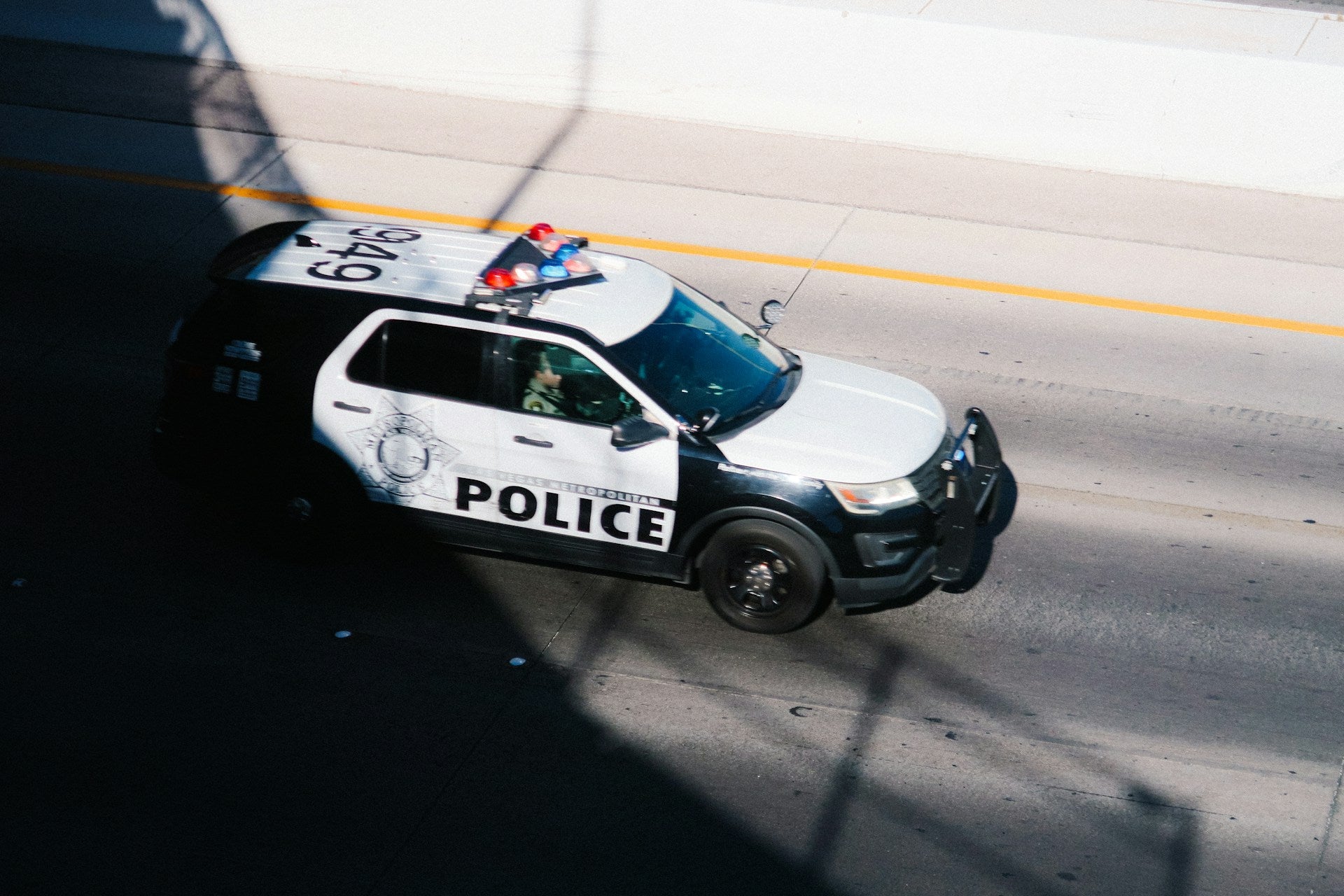
The Wayne County Fair is at its midpoint this weekend, and Saturday is the heaviest attendance day of the run. Thousands of vehicles will move in and out of the fairgrounds on Quirk Road, funneling onto Belleville Road and then onto I-94 and I-275 in both directions, and for Plymouth and Canton families, the drive home is where the legal risk actually sits. That short stretch crosses three or four police jurisdictions in under twenty minutes, and what happens in those twenty minutes decides which courthouse, which charges, and which deadlines a family is dealing with on Monday morning.
Who patrols the drive home from the fair?
From the fairgrounds at 10871 Quirk Road, the standard route home to Western Wayne County runs Quirk to Belleville Road, north to I-94, west or east to I-275, and north toward Canton and Plymouth, and that short stretch involves a surprising number of agencies. Van Buren Township Police cover Quirk Road, Belleville Road, and the immediate fairgrounds area, City of Belleville Police operate within city limits, Michigan State Police patrol I-94 and I-275, Romulus Police come into play depending on where you exit, the Wayne County Sheriff handles county roads and freeway assistance, and Canton Township Public Safety takes over once you're north on I-275 into Canton. Which agency stops you determines which court you end up in, and that's not a small detail.
Which court hears a fair weekend case?
Stops in Van Buren Township, Belleville, Sumpter Township, Romulus, and Huron Township land in the 34th District Court, while stops in the City of Plymouth, Plymouth Township, Canton Township, and Northville go to the 35th District Court in Plymouth, and all Wayne County felonies move to Wayne County Circuit Court in Detroit after preliminary examination. Jurisdiction follows where the stop occurred, not where you live and not where you were coming from, so a Plymouth resident stopped on Belleville Road has a Belleville area case, full stop, with every arraignment, pretrial conference, and motion hearing happening there.
Why does fair drinking sneak up on people?
Fair drinking is different from bar drinking. It's spread across six or eight hours in August heat, mixed with walking, sun exposure, and irregular eating, and people consistently underestimate their cumulative BAC because they never felt drunk at any single point. Michigan's thresholds under MCL 257.625 don't care how it felt: OWI is a BAC of .08 or higher or operating under the influence, high BAC is .17 or higher with enhanced penalties, OWVI under MCL 257.625(3) requires only visible impairment with no specific BAC, and drivers under 21 face zero tolerance at .02 or higher. First offense penalties run up to 93 days in jail, or 180 for high BAC, $100 to $500 in fines, a 30 day hard suspension plus 150 days restricted, six points, a mandatory substance abuse assessment, and possible vehicle immobilization.
What changes when the kids are in the car?
A county fair is a family event, and the drive home usually includes children, which is exactly where MCL 257.625(7) comes in. Operating while intoxicated with a child under 16 in the vehicle is punishable by up to one year in jail for a first offense, and it becomes a felony carrying up to five years for a second offense within ten. This is the enhancement that turns a manageable first OWI into something far more serious, and it applies at family events more than anywhere else on the calendar, precisely because the people most likely to have kids in the back seat are the ones driving home from a fair.
Is the cooler in the trunk really a misdemeanor?
In the passenger area, yes. MCL 257.624a makes it a misdemeanor to transport an open or uncapped alcoholic beverage container in the passenger area of a vehicle, and a cooler with opened cans, a half finished drink in a cupholder, or an unsealed bottle within reach all qualify, whether or not anyone was drinking from them. It applies to passengers as well as drivers, and loading a cooler back into the car after a long day at the fair is exactly how this charge happens to people who never considered themselves at risk of a criminal case.
Can fatigue alone get you pulled over?
Eight hours in August sun produces genuine impairment without any alcohol at all: slowed reaction time, lane drift, delayed braking. Michigan doesn't have a drowsy driving statute, but the driving conduct fatigue produces supports careless driving under MCL 257.626b, a civil infraction with three points, reckless driving under MCL 257.626, a 93 day misdemeanor with six points and a 90 day suspension, and, most consequentially, an OWI investigation, because the observable signs of exhaustion are indistinguishable from impairment at the roadside. A sunburned, dehydrated, exhausted driver presents exactly like an intoxicated one, and that cuts against you at the stop, but it cuts in your favor later, in the hands of a defense attorney who knows how to develop it.
What should you do during the stop?
Pull over promptly and safely, keep your hands visible, and provide your license, registration, and proof of insurance. You aren't required to answer questions about where you've been or what you've had to drink, and declining politely isn't obstruction. Roadside field sobriety tests and the preliminary breath test are refusable for most drivers, and PBT refusal is a civil infraction, not a crime, but the post arrest chemical test is different, and refusing it triggers Implied Consent consequences. If you hold a CPL and are carrying, you must disclose immediately under MCL 28.425f, and once arrested, stop talking and ask for a lawyer.
Why is the 14 day deadline the one that can't slip?
Refusing the chemical test after arrest triggers an automatic one year license suspension under MCL 257.625c, and you have 14 days from the date of arrest to request a hearing with the Michigan Secretary of State. That process runs separately from the criminal case, which means winning in court doesn't undo an unchallenged Implied Consent suspension, and it's the most frequently missed deadline in Michigan OWI practice, largely because people spend the first two weeks after an arrest hoping the whole thing goes away.
The case is more defensible than it feels on Sunday morning
Fair weekend cases defend unusually well, because timeline evidence is abundant: wristbands, ride tickets, vendor receipts, and timestamped photos establish what you consumed and when with unusual precision, family members who were with you all day can speak to your actual consumption, heat and dehydration provide a documented alternative explanation for the officer's observations, roadside conditions on Belleville Road and freeway shoulders, slope, gravel, passing traffic, and darkness, degrade field sobriety test reliability, and high volume enforcement weekends are when observation periods get shortened and protocols slip. So preserve everything from the day, every receipt and wristband, the photos, the names of everyone with you, and notes on medications or conditions affecting balance, and resist the pull toward pleading quickly just because the courthouse is a long drive away, which is the most expensive possible decision on a first OWI, the kind our traffic offense defense practice exists to prevent. Call Boria Law at (734) 453-7806 if the drive home from the fair ended in a traffic stop. Attorney Aaron J. Boria appears in the 34th District Court as well as the 35th in Plymouth, gets the 14 day deadline on the calendar before anything else, and works those twenty minutes of road until they stop defining your year.
Quick answers
What evidence from the fair day should I save?
Every receipt, wristband, and ride ticket from the day, timestamped photos, the names and numbers of everyone who was with you, notes on medications, medical conditions, or injuries affecting balance, your own dashcam footage if you have it, and all arrest paperwork. A full day at a fair generates an unusually precise record of what you consumed and when, and that timeline is often the backbone of the defense.
Is refusing the roadside breath test a crime?
No. For most drivers, roadside field sobriety tests and the preliminary breath test are refusable, and PBT refusal is a civil infraction rather than a crime. The post arrest chemical test at the station is a different matter entirely, because refusing it triggers Implied Consent consequences, including an automatic one year suspension that must be challenged within 14 days.
Can my passengers be charged over the cooler?
Yes. MCL 257.624a applies to passengers as well as drivers, so an open or uncapped container in the passenger area exposes the people riding along, not just the person behind the wheel. Keeping opened cans sealed away in the trunk area rather than the passenger compartment is the simple way to keep a family drive home from producing multiple misdemeanor charges.
Related reading
- Wayne County Fair: OWI, MIP, and Carnival Arrests in the 34th District Court
- Refusing a Breath Test in Michigan: PBT vs Chemical Test and the 14 Day Deadline
- Why the Cooler in Your Back Seat Is a Misdemeanor
Share:
Fair Weekend Traffic: Belleville Road, I-94, and the Drive Home From Quirk Road
Fair Weekend Traffic: Belleville Road, I-94, and the Drive Home From Quirk Road