
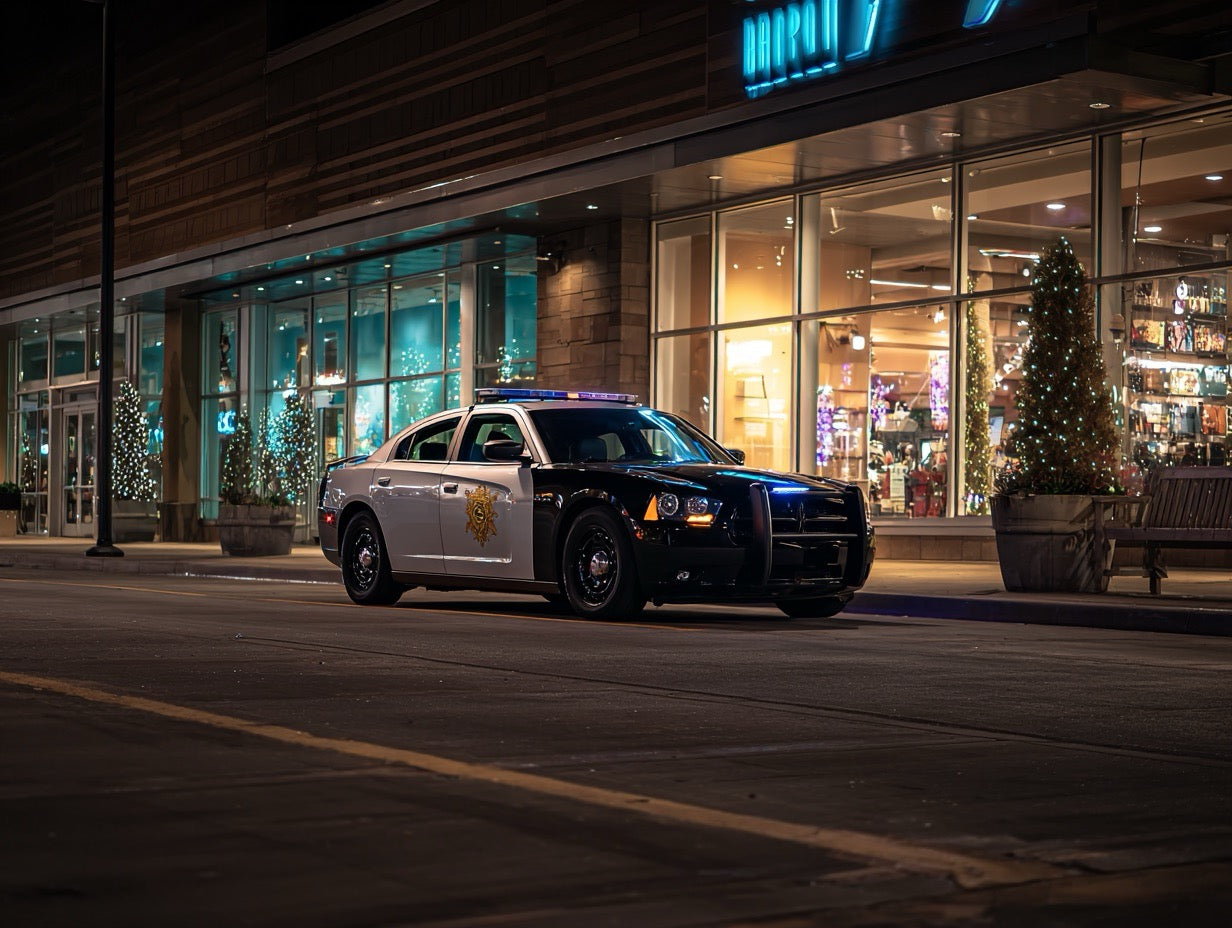
Each year, as Michigan residents return home from spring break trips, airport security encounters a range of issues—from misplaced luggage to much more serious criminal allegations. In some unfortunate cases, travelers are arrested at Detroit Metropolitan Wayne County Airport (DTW) for alleged drug possession. What may have started as a relaxing vacation can quickly turn into a life-altering encounter with Michigan’s criminal justice system.
In this article, we’ll take a detailed look at what happens when travelers are arrested at airports in Michigan on drug-related charges, the relevant state laws, the legal process that follows, potential penalties, and what defenses might be available. This is intended to help you understand your rights and the steps you should take if you or someone you know faces such charges.
How Airport Drug Arrests Happen at DTW
Detroit Metropolitan Airport (DTW) is one of the busiest travel hubs in the Midwest. With thousands of passengers passing through daily, airport security—including the Wayne County Airport Police Department and Transportation Security Administration (TSA)—maintain constant surveillance. Although TSA’s primary focus is security threats, their screenings often lead to the discovery of prohibited items, including controlled substances.
Common scenarios leading to arrests include:
- Travelers returning from vacation with personal-use amounts of marijuana or other substances still in their luggage.
- Prescription medications carried without proper labeling or a valid prescription.
- Individuals found with controlled substances such as cocaine, Adderall without a prescription, or other narcotics.
- Possession of drug paraphernalia, including pipes or vaporizers containing residue.
When drugs are found by TSA officers, the discovery is handed over to local law enforcement, most commonly the Wayne County Airport Police. If the drugs are illegal under Michigan law, an arrest may follow—even if the quantity seems small or the traveler claims ignorance.
Michigan Drug Possession Laws Explained
Michigan law treats drug possession seriously. Controlled substances are regulated under the Michigan Public Health Code (MCL 333.7401 et seq.). The penalties depend on the type of drug and the quantity involved.
Controlled Substance Schedules
Michigan categorizes controlled substances into five schedules based on their potential for abuse and accepted medical use:
- Schedule 1: Drugs with high potential for abuse and no accepted medical use in the U.S., such as heroin, LSD, or ecstasy.
- Schedule 2: High potential for abuse but with limited medical use, such as cocaine, oxycodone, Adderall, and methamphetamine.
- Schedule 3–5: Drugs with lower abuse potential but still regulated, including some prescription medications.
Key Statutes and Penalties
The penalty for drug possession under Michigan law varies by schedule and amount:
- Schedule 1 or 2 narcotics (less than 25 grams): Up to 4 years in prison and a $25,000 fine (MCL 333.7403(2)(a)(v)).
- 25 to 49 grams: Up to 4 years in prison and a $25,000 fine.
- 50 to 449 grams: Up to 20 years in prison and a $250,000 fine.
- Marijuana possession: Although recreational use is legal for persons over 21, possession exceeding the statutory limits or transport across state lines can lead to charges.
- Possession of analogues (“look-alike” drugs): Up to 2 years in prison and a $2,000 fine.
Even small amounts can result in criminal charges, and at the airport, those charges can escalate quickly due to overlaps with federal jurisdiction.
Federal Implications at the Airport
Airports add another layer of complexity because TSA operates under federal law. Even though Michigan has legalized marijuana for recreational and medical use, it remains illegal at the federal level. Because DTW handles interstate and international travel, federal authorities can become involved, especially if the drugs were transported across state or national borders.
Common examples of when federal concerns may arise include:
- Carrying marijuana from Michigan to another state—even another state where it’s legal.
- Possession of controlled substances discovered during customs processing upon re-entry.
- Large-scale possession indicating possible intent to distribute across state lines.
In such cases, federal prosecutors may seek charges under 21 U.S.C. §844 (simple possession) or §841 (possession with intent to distribute). It’s critical for any Michigan traveler arrested at DTW to understand both state and federal exposure.
The Legal Process After an Arrest at DTW
If arrested at DTW for drug possession, the process typically unfolds like any other criminal case in Michigan—but with airport police and sometimes federal authorities initiating the arrest. The local venue for most airport arrests is the 34th District Court in Romulus, Michigan.
1. Booking and Arraignment
Once detained, you’ll be processed, fingerprinted, and formally booked. Within 24 to 48 hours, your arraignment will occur, where a judge reads the charges against you, advises you of your rights, and sets bond. For first-time possession charges, a personal bond may be possible; for repeat offenses or larger amounts, stricter conditions or cash bonds can be imposed.
2. Pretrial Hearings
Your attorney will review evidence gathered by police, challenge unlawful searches or seizures, and negotiate with prosecutors. Drug possession cases often hinge on how evidence was obtained. TSA searches, though broad for security reasons, still must adhere to constitutional limits when involving criminal evidence.
3. Possible Motions and Suppression Issues
A skilled criminal defense lawyer can file motions to suppress evidence. For example, if TSA or police exceeded their authority or failed to establish a proper chain of custody, key evidence might be excluded. These legal nuances can make or break a possession case.
4. Plea Negotiations or Trial
Most first-time offenders may be eligible for alternative resolutions, such as a plea under Michigan’s deferral statute (MCL 333.7411) that allows dismissal upon successful completion of probation. If a plea is not possible, the case may proceed to trial, where prosecutors must prove possession and knowledge of the substance beyond a reasonable doubt.
5. Sentencing and Aftermath
Sentencing depends on multiple factors: criminal history, type and amount of the drug, and whether the conduct occurred in a secure facility like an airport. Probation, fines, and community service are common for small possession charges, but imprisonment remains possible, particularly for narcotics or repeat offenses.
Defenses to Drug Possession at Michigan Airports
Every criminal charge has elements the prosecution must prove. For possession, they must show you knowingly had control over a controlled substance. Several effective defenses exist depending on the circumstances.
Lack of Knowledge or Control
If you did not know a drug was in your luggage or the item wasn’t under your control, you cannot be convicted. This defense can be compelling when multiple travelers share luggage or when a controlled substance was unintentionally mixed with personal belongings.
Unlawful Search and Seizure
Even at airports, constitutional rights apply. If a search exceeded TSA’s scope or transitioned improperly into a criminal investigation, the evidence can be suppressed. This is one of the strongest defenses available in many DTW possession cases.
Prescription Authorization
If the controlled substance was prescribed, proof through medical documentation can lead to dismissal. However, the prescription must be valid, unexpired, and for the individual in possession of the medication.
Chain of Custody Errors
Prosecutors must prove that the substance tested is the same as what was allegedly seized. Any gaps or errors in the chain of custody can raise reasonable doubt.
Mistaken Identity or Lab Errors
Forensic labs are not infallible. Sometimes the test results may be contaminated, or the lab fails to follow standard testing protocols, leading to false positives. An attentive defense attorney will scrutinize these reports carefully.
Options for First-Time Offenders
Michigan law recognizes that not every individual accused of simple drug possession deserves a permanent criminal record. There are diversionary programs and deferrals designed to give people a second chance.
MCL 333.7411 (First-Time Drug Possession Deferral)
This provision allows a person with no prior drug conviction to plead guilty but have the proceedings deferred. If completed successfully—usually involving probation, counseling, and drug testing—the case is dismissed, leaving no public record of conviction.
HYTA (Holmes Youthful Trainee Act)
Defendants between 18 and 26 years old may qualify for HYTA status. Similar to the 7411 deferral, it prevents a permanent record upon successful completion, but eligibility is determined at the court’s discretion and often based on the severity of the offense.
Collateral Consequences of a Drug Possession Conviction
Even beyond jail time or fines, a drug conviction can carry lasting repercussions in Michigan. Understanding these consequences is crucial before entering any plea agreement.
- Driver’s License Suspension: A first conviction can lead to a six-month suspension, even if the offense occurred outside of a vehicle.
- Employment Challenges: Background checks may reveal drug convictions, affecting job opportunities, especially in government or safety-sensitive fields.
- Travel Restrictions: Certain countries, including Canada, restrict entry to individuals with drug convictions.
- Professional Licensing: Medical professionals, teachers, and others holding state-issued licenses can face disciplinary actions.
Because the stakes are so high, having strong legal representation from the very beginning is essential to avoiding or minimizing these collateral effects.
Why Legal Representation Is Critical
Drug possession law is one of the most technical areas of Michigan criminal defense. Each fact—whether the drug was found during a legal search, how much was possessed, or who actually owned it—can significantly change the outcome. At DTW, where multiple enforcement agencies may be involved, the complexity increases even further.
Hiring an experienced Michigan criminal defense attorney ensures that your rights are protected from the start. A knowledgeable lawyer will:
- Analyze every step of the arrest and search for mistakes or constitutional violations.
- Explore deferral or diversion programs you may qualify for.
- Negotiate with prosecutors for reduced charges or dismissals.
- Advocate in court for the most favorable possible resolution.
If you or someone you know has been arrested for drug possession at DTW, do not attempt to handle it alone. Contact a Michigan criminal defense attorney as soon as possible. Attorney Aaron J. Boria has successfully defended clients throughout Wayne County and across the state. Call (734) 453-7806 for a free consultation today.
Practical Advice for Michigan Travelers
Although some drug arrests at airports arise from simple mistakes, being aware of Michigan and federal laws can help you avoid such situations in the first place.
- Double-check your luggage: Before returning from vacation, inspect all bags for leftover medications, edibles, or other controlled substances.
- Carry prescriptions correctly: Keep medications in their original prescription containers with your name clearly displayed.
- Know your limits: Even legal marijuana has transport and possession limits; exceeding them leads to possible charges.
- Understand federal jurisdiction: Regardless of Michigan’s legalization, federal authorities can prosecute for possession at airports.
Awareness is key. The law doesn’t distinguish between intentional and unintentional violations, but preparation can prevent future legal trouble.
When to Contact a Michigan Criminal Defense Lawyer
The moments following an arrest can be confusing and intimidating, especially in a busy setting like an airport. Politely invoke your right to remain silent and request to speak with your attorney. Statements made without counsel can severely impact the outcome of your case later.
If you are under investigation or have already been charged, call Attorney Aaron J. Boria immediately at (734) 453-7806. He has extensive experience defending drug possession and related offenses at both the district and circuit court levels. You can also learn more about Michigan criminal defense by visiting our criminal defense homepage.
Conclusion
Returning from spring break should end with unpacking, not an arrest. However, even diligent travelers can find themselves accused of drug possession at DTW. Michigan’s drug laws are strict but navigable with the right defense strategy. Understanding your rights, the process, and available defenses can dramatically change the outcome of your case.
A conviction is not inevitable, and with the right attorney, there are paths toward reduced penalties or complete dismissal. Whether you’re facing a first offense or a more serious charge, remember that time is critical—seek representation immediately.
For trusted and experienced legal help, call (734) 453-7806 today or visit Plymouth Criminal Attorney online to schedule your free consultation. Protect your rights, your record, and your future.
Share:
Tax Day DUI Spike: Unpacking the Alarming Rise in OWI Arrests in Wayne County Around April 15
Tigers Home Opener Tailgate Troubles: Arrests for Public Intoxication, Fighting, and Open Container Charges in Detroit