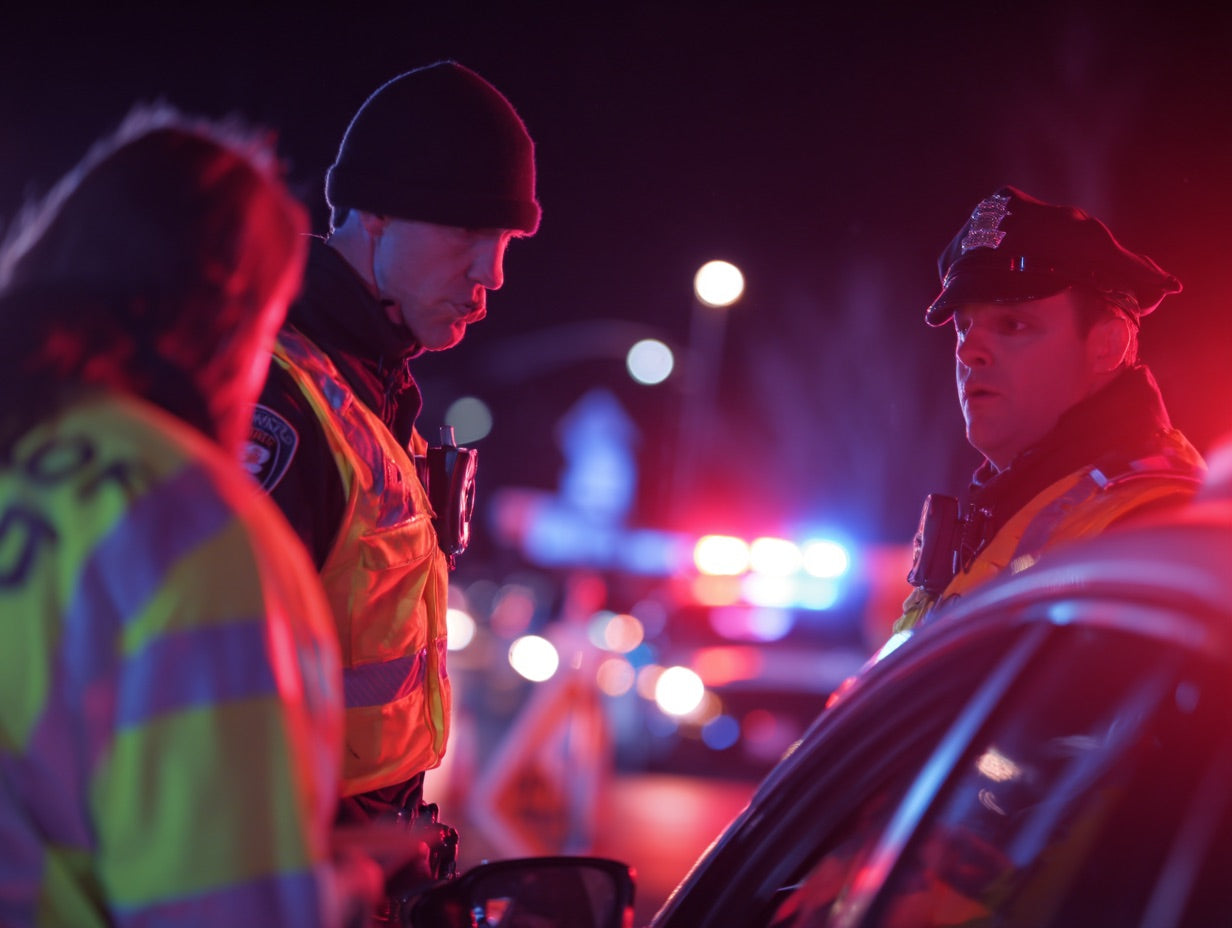
St. Patrick’s Day celebrations often come with green attire, lively music, and unfortunately, a heightened number of drinking and driving arrests throughout Michigan. If this holiday ended with flashing lights in your rearview mirror and a breath test showing a blood alcohol concentration (BAC) of 0.17% or higher, you may be facing what Michigan calls a “High BAC” or “Super Drunk” charge. This offense carries enhanced penalties, and knowing how to navigate Michigan’s “Super Drunk” law can make all the difference in the outcome of your case.
Understanding Michigan’s “Super Drunk” or High BAC Law
Under Michigan law, a standard Operating While Intoxicated (OWI) offense occurs when a person operates a motor vehicle with a blood alcohol concentration (BAC) of 0.08% or greater. However, Michigan’s “Super Drunk” law—formally known as “Operating While Intoxicated with a High BAC”—applies when your BAC is 0.17% or higher at the time of driving.
The statute governing this is MCL 257.625(1)(c). While a regular OWI is a serious criminal misdemeanor, a High BAC offense carries substantially greater penalties, making it critical that you understand exactly what the prosecution must prove and what your defense options may be.
What the Prosecutor Must Prove in a High BAC Case
To convict someone under Michigan’s “Super Drunk” law, the prosecution must prove each of the following elements beyond a reasonable doubt:
- You operated a motor vehicle on a public road or an area generally open to the public.
- At the time of operation, your blood alcohol concentration was 0.17% or higher, as verified by a properly administered chemical test (such as DataMaster breath test or blood test).
- The chemical test was conducted in accordance with Michigan Department of State Police administrative rules, and the equipment was certified and accurate at the time of testing.
If even one element cannot be proven beyond a reasonable doubt, you cannot be found guilty of the High BAC offense. This is where an experienced defense attorney can critically examine test procedures, timing, and police investigation errors that may undermine the state’s case.
Penalties for High BAC (Super Drunk) in Michigan
Michigan law imposes significant penalties for a conviction under the “Super Drunk” statute, even for first-time offenders. These penalties include:
- Jail Time: Up to 180 days (versus a maximum of 93 days for a standard OWI first offense).
- Driver’s License Suspension: Your driver’s license will be suspended for one full year. However, after 45 days, you may be eligible for a restricted license—but only if you install an ignition interlock device on every vehicle you drive or own.
- Fines: A fine ranging from $200 to $700.
- Community Service: Up to 360 hours.
- Ignition Interlock Requirement: Mandatory installation for those who receive restricted driving privileges after the initial 45-day suspension.
Additionally, the court may order mandatory alcohol education or treatment programs and place the individual on probation with conditions that may include no alcohol consumption, random testing, or counseling. Insurance premiums often skyrocket following a conviction, adding years of financial consequences beyond court-ordered penalties.
The Impact on Your Record and Future
A “Super Drunk” conviction is not a civil infraction—it is a criminal offense that stays on your record. Having this conviction can affect professional licenses, employment opportunities, and even future travel. Michigan law does allow for expungement of certain first-offense OWI convictions (including High BAC) under specific circumstances after a waiting period, but the requirements are strict and the process is lengthy. Avoiding a conviction through an effective defense strategy is always the best route if possible.
Defending Against a Michigan High BAC Charge
No two cases are the same, and the strongest defense strategies depend on the facts and evidence. Some of the most effective defenses to a High BAC charge include:
- Challenging the Traffic Stop: Law enforcement must have a legitimate reason (reasonable suspicion) for the initial stop. If the stop was unlawful, evidence collected afterward may be suppressed.
- Questioning Test Accuracy: Breath and blood tests must adhere strictly to Michigan State Police procedures. Machine calibration errors, improper administration, or storage issues can invalidate results.
- Timing of the Test: Alcohol continues to absorb into the bloodstream after consumption. A delay between driving and testing can cause artificially high BAC results not reflective of your BAC while you were driving.
- Medical and Physiological Factors: Conditions such as acid reflux, diabetes, or certain diets can produce falsely inflated breath test readings.
- Officer Misconduct or Improper Observation Procedures: Michigan’s rules require a minimum 15-minute observation period before administering a breath test. If that rule is broken, your results may be challenged.
Even if the evidence appears strong, a skilled defense attorney can often negotiate a reduction in charges. For instance, prosecutors may agree to reduce a High BAC charge to “Operating While Visibly Impaired” (OWVI), which carries lower penalties and no mandatory ignition interlock requirement.
Understanding the Court Process
When charged with a High BAC offense after St. Patrick’s Day, your case will follow a general sequence of court stages similar to other OWI cases in Michigan:
1. Arraignment
This is your first court appearance, where you will be formally charged, advised of your rights, and potentially released on bond or personal recognizance. Often, your attorney can waive the arraignment to avoid unnecessary court appearances and prevent public record posting before arrangements are made.
2. Pretrial Conference
At this stage, your attorney will discuss your case with the prosecutor, review evidence, challenge possible violations of procedure, and explore resolutions. Many High BAC cases resolve here through a reduction or plea agreement that significantly minimizes penalties.
3. Motions and Hearings
Your attorney may file motions to suppress evidence—such as a breath or blood test result obtained improperly—or to dismiss the case if procedural or constitutional violations are found. Evidence suppression can lead to dismissal or improved negotiation leverage.
4. Trial
If your case proceeds to trial, the prosecution must prove guilt beyond a reasonable doubt. Expert witnesses, video evidence, and technical testimony about testing procedures often become key components of both sides’ arguments.
5. Sentencing
If convicted, the judge will determine your sentence within statutory limits. Michigan courts take High BAC convictions seriously, but sentencing can vary significantly based on factors such as prior offenses, your behavior after arrest, and mitigation efforts like voluntary counseling or alcohol treatment.
Getting Your Driver’s License Back After High BAC Suspension
After a High BAC suspension, drivers face a minimum 45-day “hard” suspension—meaning absolutely no driving. After that period, if you meet eligibility requirements, you may apply for a restricted driver’s license with an ignition interlock device installed on your vehicle.
Michigan’s Secretary of State monitors compliance with ignition interlock restrictions closely. Any tampering, failed start tests, or violations can result in re-suspension or revocation. Ensuring your device is properly maintained and all reporting is accurate is essential to regain full driving privileges without setbacks.
St. Patrick’s Day Arrests: Why They Matter
Each year, Michigan law enforcement agencies increase DUI patrols around St. Patrick’s Day weekend. Many individuals charged during this period face High BAC allegations due to festive environments where alcohol consumption is common and routine testing is strict. If your BAC reading exceeded 0.17% after celebrating, know that you are not alone—and there are paths forward.
Being charged after a holiday does not mean automatic conviction. In fact, a significant number of arrests around this time involve questionable stops, hastily conducted breath tests, and improper machine calibration due to busy enforcement periods. Your defense begins with identifying these issues and demanding accountability.
Why You Need an Experienced Michigan OWI Defense Attorney
Michigan’s “Super Drunk” law is one of the toughest in the nation for first-time offenders, but an attorney experienced in OWI defense can make a world of difference. An effective defense requires detailed knowledge of Michigan’s traffic and criminal procedure rules, as well as the science behind chemical testing.
Attorney Aaron J. Boria has successfully defended clients charged under Michigan’s High BAC statute throughout Wayne, Oakland, and Washtenaw Counties. Whether negotiating reduced charges or fighting for dismissal, each defense is custom built based on your unique circumstances.
If you have been charged with a High BAC Offense, contact Aaron J. Boria, PLLC immediately. Call (734) 453-7806 to schedule a free consultation and start protecting your rights today. More information about Michigan OWI laws is available at criminal defense resources section.
Treatment and Recovery Programs May Help Your Case
Judges often consider personal accountability and rehabilitation efforts when determining sentences in High BAC cases. Taking proactive steps such as enrolling in alcohol education, therapy, or court-approved treatment programs not only shows responsibility but can also support negotiations for leniency or charge reduction.
Michigan courts frequently partner with local resources including Alcoholics Anonymous (AA), outpatient rehabilitation centers, and the Sobriety Court program. If you qualify and complete Sobriety Court, you may be eligible for a restricted license sooner and can benefit from close monitoring instead of harsher incarceration terms.
Expungement Eligibility for OWI in Michigan
Under the 2021 law enacted in Michigan, certain first-time OWI offenders can petition the court for expungement after a waiting period of five years from completion of probation or jail. This includes High BAC (“Super Drunk”) offenses, as long as:
- This is your first and only OWI offense.
- No prior serious offenses or subsequent impaired-driving convictions exist.
- You have completed all sentencing terms, including payment of fines and community service.
While expungement is not guaranteed, successfully setting aside a conviction can help restore normalcy—particularly regarding employment, housing, and background checks. An attorney familiar with expungement law can guide you through filing the petition correctly and presenting your case to the court.
Key Takeaways
- A BAC of 0.17% or higher triggers Michigan’s “Super Drunk” penalties, even for a first offense.
- Penalties include up to 180 days in jail, one-year license suspension, fines, and a mandatory ignition interlock for restricted privileges.
- The prosecutor must prove the chemical test followed all state procedures and that your BAC exceeded the legal threshold at the time of driving.
- A knowledgeable defense attorney can challenge the legality of the stop, the accuracy of the testing, and the handling of evidence to achieve a reduction or dismissal.
- St. Patrick’s Day arrests often involve procedural errors due to increased enforcement activity—reviewing every detail of the case is crucial.
If you’re facing a High BAC charge, don’t wait until your court date is around the corner. Contact Aaron J. Boria, PLLC today at (734) 453-7806 for a free confidential consultation.
Michigan takes impaired driving seriously, and the “Super Drunk” law is a prime example of how far-reaching the consequences can be after a night of celebration. A conviction can affect every part of your life—from your driving record to your reputation and livelihood. However, being charged does not mean you are automatically guilty. With the right legal representation, proactive recovery steps, and a thorough understanding of your rights, it is possible to move forward and minimize the impact.
Don’t navigate Michigan’s High BAC laws alone. If your St. Patrick’s Day ended with an arrest, call (734) 453-7806 today to speak directly with attorney Aaron J. Boria. Get answers to your questions and start planning your defense today. Your future is worth defending.
Share:
What to Expect in 35th District Court After an Arrest at the Plymouth St. Patrick's Parade
Can Police Pull You Over for Swerving to Avoid Potholes? Understanding Spring Road Conditions and Traffic Stops in Michigan