
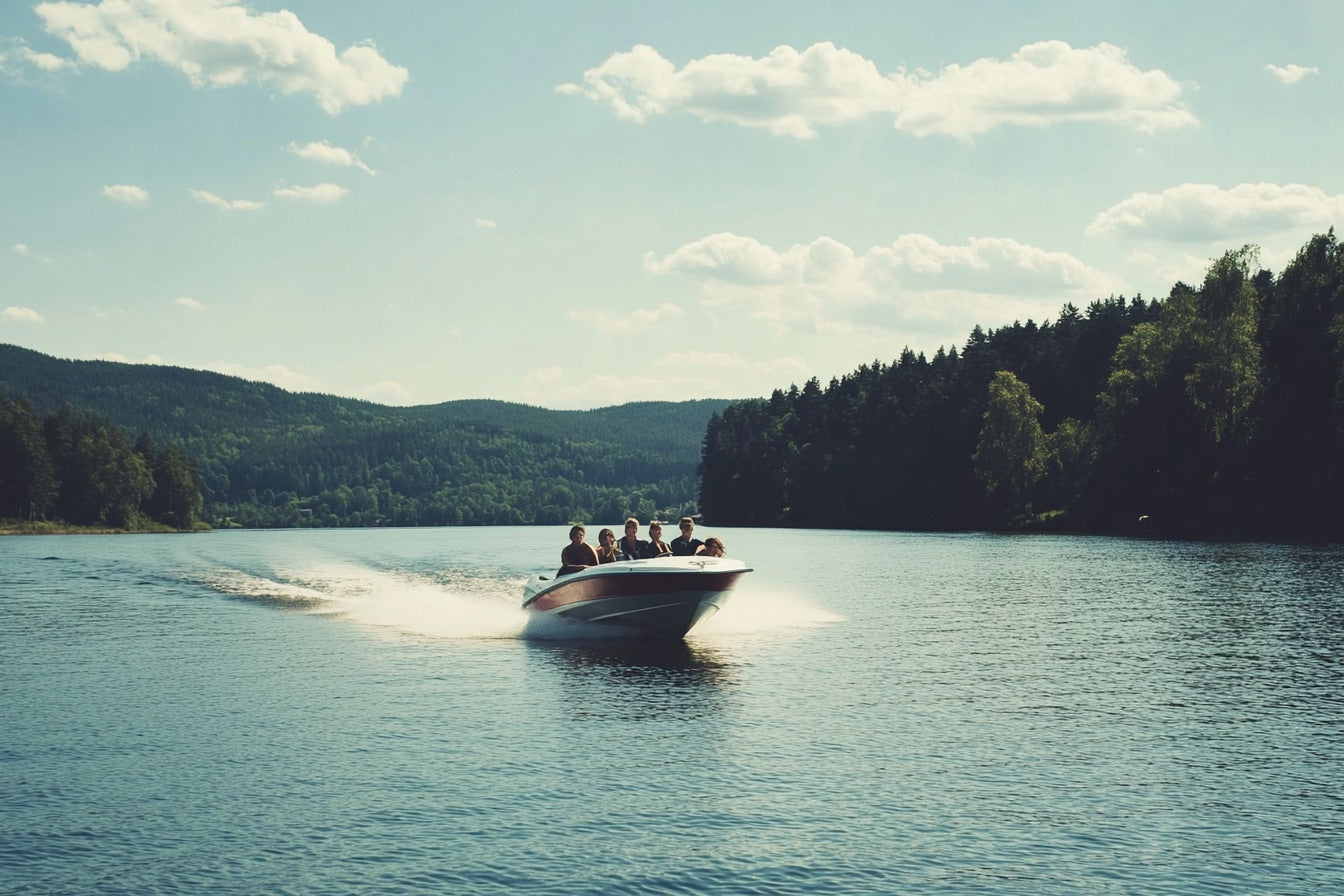
The Fourth of July is the single busiest boating weekend on Michigan water. Lake St. Clair, Belleville Lake, Kent Lake, Ford Lake, and the Detroit River fill with boats, rafting groups, and anchored crowds watching fireworks from the water. It is also the weekend with the heaviest marine law enforcement presence of the year.
Boating Under the Influence — BUI — arrests spike accordingly, and most of the people charged are not reckless. They are people who spent eight hours in the sun with a cooler and never registered how much they had consumed.
Michigan's BUI Statute
Operating a vessel while intoxicated is governed by MCL 324.80176. It is unlawful to operate a motorboat with:
- A blood alcohol content of .08 or higher,
- Any amount of a Schedule 1 controlled substance or cocaine in your system, or
- While under the influence of alcohol, a controlled substance, or a combination.
As on the road, Michigan also recognizes operating a vessel while visibly impaired at BAC levels below .08 when the operation itself shows impairment.
Penalties
A first-offense BUI carries:
- Up to 93 days in jail (180 days for a High BAC of .17 or above),
- Fines and court costs,
- Up to 45 days of community service,
- Possible suspension of the privilege to operate a vessel,
- Substance abuse assessment,
- A permanent criminal record.
A second offense within seven years is a misdemeanor with up to one year in jail. A third offense is a felony carrying up to five years. BUI causing serious impairment of a body function or death carries felony penalties comparable to the equivalent road offenses.
A BUI does not add points to your driver's license, but it is a criminal conviction, and it counts as a prior if you are later charged with an OWI or another BUI.
Who Is on the Water July 4th
- Michigan DNR Conservation Officers — full arrest authority, statewide jurisdiction.
- Wayne County Sheriff Marine Division — Detroit River, Lake Erie, inland Wayne County lakes.
- Macomb County Sheriff Marine Division — Lake St. Clair.
- Oakland County Sheriff Marine Division — Kent Lake and Oakland County inland lakes.
- U.S. Coast Guard — Detroit River, Lake St. Clair, Great Lakes waters.
- Local marine units on Belleville Lake and other inland waters.
Marine officers can conduct safety inspections without suspicion of a crime — checking life jackets, fire extinguishers, registration, and navigation lights. That inspection authority is what makes water enforcement different from road enforcement, and it is how most BUI investigations begin.
Why Boating Impairment Sneaks Up on People
Several factors specific to a day on the water accelerate impairment:
- Sun exposure and dehydration,
- Heat,
- Wave motion and engine vibration, which produce a fatigue effect sometimes called “boater's hypnosis,”
- Extended consumption windows — six to ten hours rather than two or three,
- Irregular eating.
These same factors are also the foundation of a BUI defense, because they produce physical presentations — flushed skin, unsteadiness, red eyes, slow speech — that officers interpret as intoxication in a sober person.
Field Sobriety Tests on a Boat
The standardized field sobriety tests used on the roadside — horizontal gaze nystagmus, walk-and-turn, one-leg stand — were validated for stable, level ground. They were not designed for a rocking deck.
Marine officers often use seated battery tests instead: finger-to-nose, hand coordination tasks, counting backward, reciting the alphabet. These are not standardized in the same way and are more open to challenge. When officers do administer walk-and-turn or one-leg stand on a dock or a boat, the reliability problems are substantial and worth litigating.
The Trailer and the Truck
The most consequential moment of a boating day is often the boat ramp. A person who has been drinking on the water then gets into a truck to load the trailer and drive home. That transition creates the possibility of two separate charges: a BUI for operating the vessel and an OWI under MCL 257.625 for operating the vehicle.
Boat ramps at Belleville Lake, Kent Lake, and the Lake St. Clair Metropark launch areas are all locations where officers routinely wait for exactly this.
Implied Consent on the Water
Michigan's vessel implied consent provisions parallel the highway version. Operating a boat constitutes consent to chemical testing upon lawful arrest for BUI. Refusal carries administrative consequences for boating privileges and can be used as evidence.
If you were also arrested for OWI at the ramp, the standard 14-day Implied Consent deadline for your driver's license applies. Calendar it immediately.
Where the Cases Go
- Belleville Lake — 34th District Court (Van Buren Township, Belleville).
- Kent Lake / Kensington Metropark — 52-1 District Court in Novi (Oakland County side) or 53rd District Court in Brighton (Livingston County side), depending on location.
- Ford Lake — 14A District Court, Washtenaw County.
- Lake St. Clair — Macomb County district courts by location; St. Clair Shores, Harrison Township, and New Baltimore each have their own.
- Detroit River — 36th District Court for Detroit waters.
- Lake Erie Metropark — 33rd District Court, Trenton.
For a Plymouth resident, almost every one of these is an out-of-jurisdiction case requiring travel for each court date.
Defense Issues in BUI Cases
- Was the initial contact lawful? A safety inspection is permitted; a pretextual stop to investigate intoxication without any basis is a different question.
- Who was operating? On a boat with six people aboard and a shared helm, operator identity is frequently contested and frequently weak in the report.
- Were the tests appropriate for conditions? Wave action, deck surface, and sun exposure all matter.
- Chemical test administration. Testing often occurs well after the stop, at a dock or station, raising timing and absorption questions.
- Sober-but-sunburned. Eight hours of sun and wind produces exactly the physical signs officers document as impairment.
Collateral Consequences
A BUI conviction can affect employment, professional licensing in healthcare, law, and finance, security clearances, concealed pistol license eligibility, and immigration status for non-citizens. It also establishes a prior for any future alcohol-related charge.
If the Fourth Ended at the Dock
BUI cases are highly defensible, particularly first offenses without aggravating facts. The physical realities of a long day on the water cut both ways, and a defense attorney who understands marine enforcement knows how to use them. Attorney Aaron J. Boria represents boaters charged across Southeast Michigan's waterways and the district courts that cover them. Call (734) 453-7806 to talk through your case before your first appearance.
Share:
Charged With Disorderly Conduct at Art in the Park? What the 35th District Court Actually Does
Your First Court Date in the 35th District Court: A Complete Walkthrough